




View Information About HSR Ratings

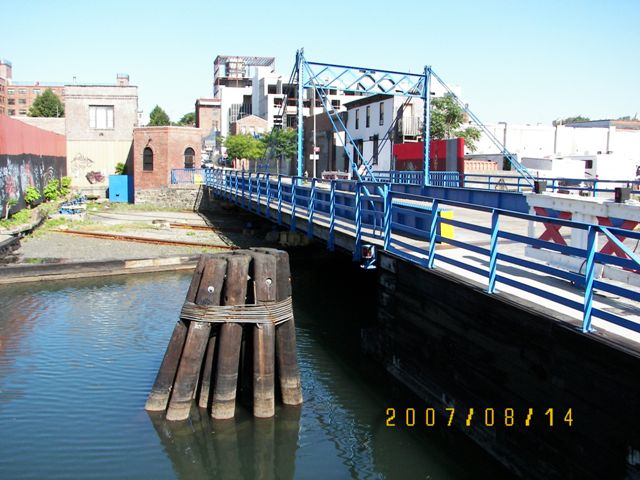
This bridge is one of an estimated three remaining retractile bridges surviving in the United States. In a retractile bridge, the bridge rolls back off of the waterway using a system of tracks and rollers. The benefits and ease of constructing other movable bridge types meant that the retractile was never a popular movable bridge type. Only Boston and New York City appear to have ever built more than a couple of these bridges. Of the estimated three surviving retractile bridges known in the United States and indeed North America, New York City is home to two of the retractile bridges, and these two are the only two in North America that actually still operate. The other retractile bridge in New York City is on Borden Avenue. Because both bridges are an example of a creative design of movable bridge and the only way in which the operation of such a design can be witnessed today, this bridge should be considered among the most significant historic bridges in North America. The only other retractile bridge aside from these two is in Boston. Rumors of a retractile bridge in Chicago were investigated and were found to be false; the bridge some had been calling a retractile bridge in Chicago was actually an unusual form of bascule bridge called a Rall bascule.
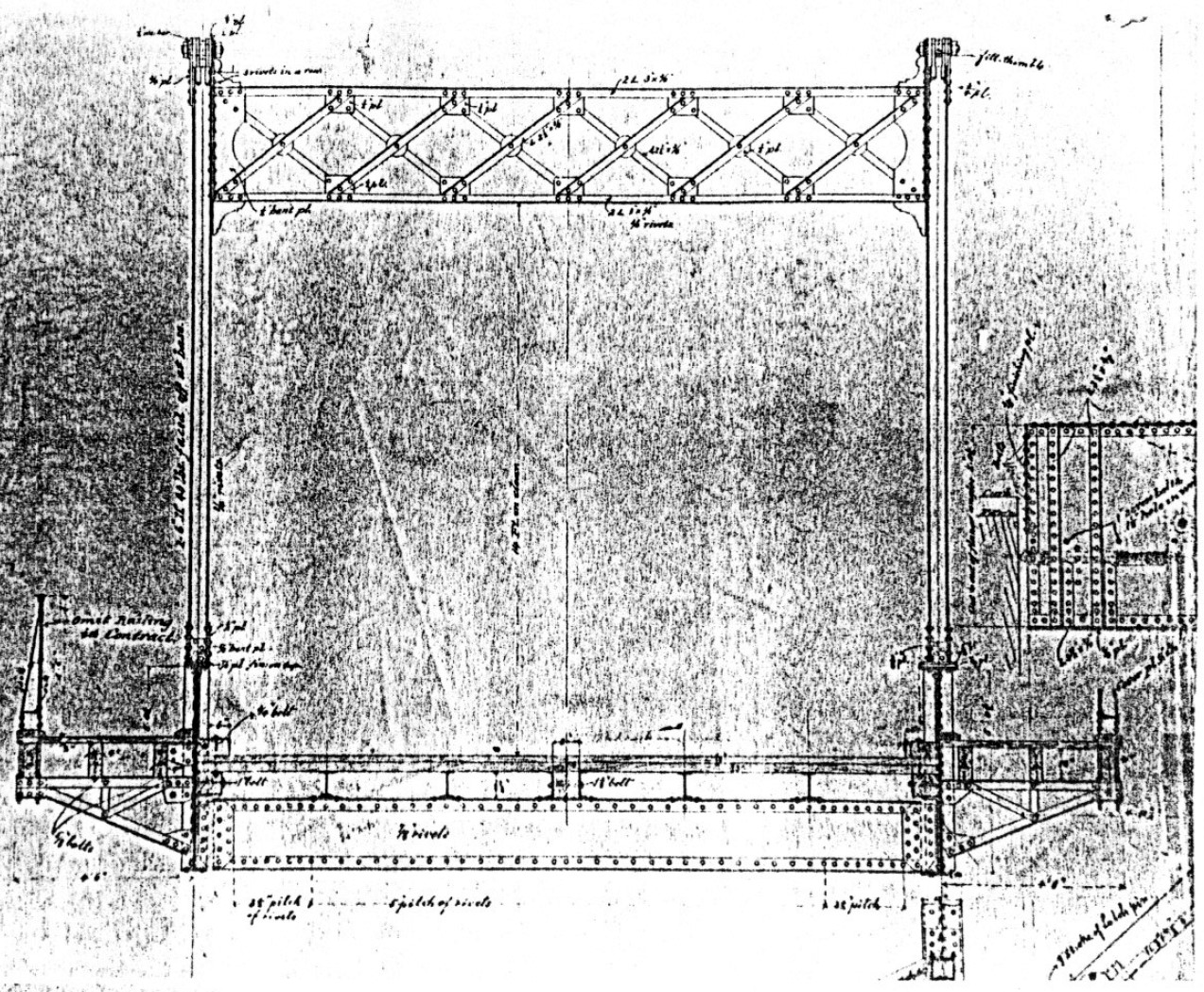
Although the Carroll Street Bridge had deteriorated and been closed to traffic just short of its 100th anniversary back in the 1980s, the bridge was sensitively rehabilitated to bring it back to good condition while also maintaining its historic integrity. The bridge was also designated a landmark under the Landmarks Preservation Commission which is a New York City program to protect heritage structures. As a result of these efforts, the bridge remains today with good historic integrity. All the essential elements of the 1889 bridge remain including its continuing operation as a retractile bridge, and also lack of alteration or changes to the original superstructure design. The bridge superstructure is essentially a simple through plate girder, but it has a distinctive appearance on account of the overhead bracing and stabilizing stays, which are called "Samson Posts."
Be sure to review the Landmarks Preservation Designation document, which is offered at the top of this narrative, as it offers a detailed history and discussion of the bridge.
Video of the bridge retracting is available on YouTube here.


Coordinates (Latitude, Longitude):
Search For Additional Bridge Listings:
Bridgehunter.com: View listed bridges within 0.5 miles (0.8 kilometers) of this bridge.
Bridgehunter.com: View listed bridges within 10 miles (16 kilometers) of this bridge.
Additional Maps:
Google Streetview (If Available)
GeoHack (Additional Links and Coordinates)
Apple Maps (Via DuckDuckGo Search)
Apple Maps (Apple devices only)
Android: Open Location In Your Map or GPS App
Flickr Gallery (Find Nearby Photos)
Wikimedia Commons (Find Nearby Photos)
Directions Via Sygic For Android
Directions Via Sygic For iOS and Android Dolphin Browser
USGS National Map (United States Only)
Historical USGS Topo Maps (United States Only)
Historic Aerials (United States Only)
CalTopo Maps (United States Only)

© Copyright 2003-2024, HistoricBridges.org. All Rights Reserved. Disclaimer: HistoricBridges.org is a volunteer group of private citizens. HistoricBridges.org is NOT a government agency, does not represent or work with any governmental agencies, nor is it in any way associated with any government agency or any non-profit organization. While we strive for accuracy in our factual content, HistoricBridges.org offers no guarantee of accuracy. Information is provided "as is" without warranty of any kind, either expressed or implied. Information could include technical inaccuracies or errors of omission. Opinions and commentary are the opinions of the respective HistoricBridges.org member who made them and do not necessarily represent the views of anyone else, including any outside photographers whose images may appear on the page in which the commentary appears. HistoricBridges.org does not bear any responsibility for any consequences resulting from the use of this or any other HistoricBridges.org information. Owners and users of bridges have the responsibility of correctly following all applicable laws, rules, and regulations, regardless of any HistoricBridges.org information.
