



View Information About HSR Ratings
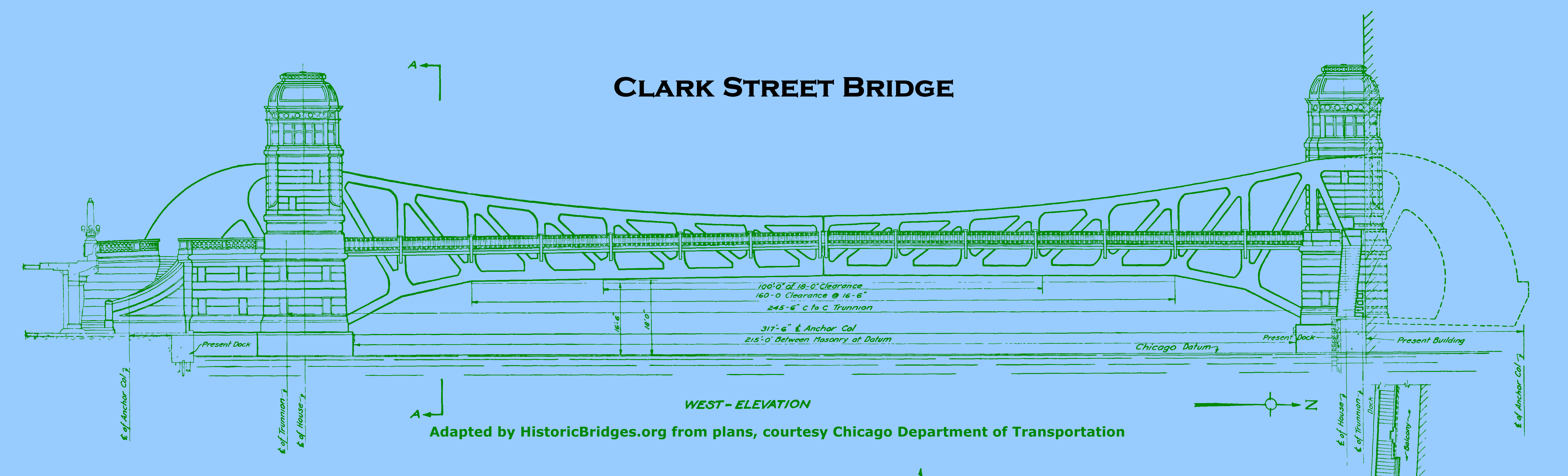
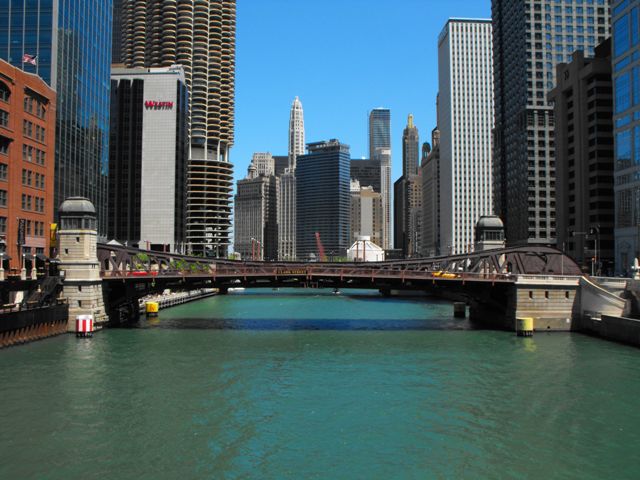
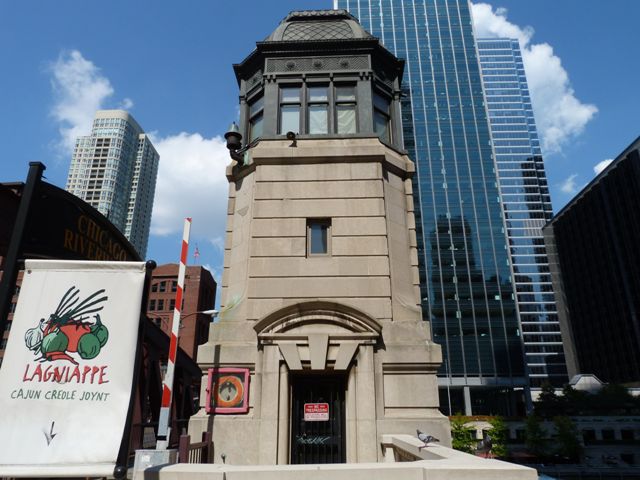
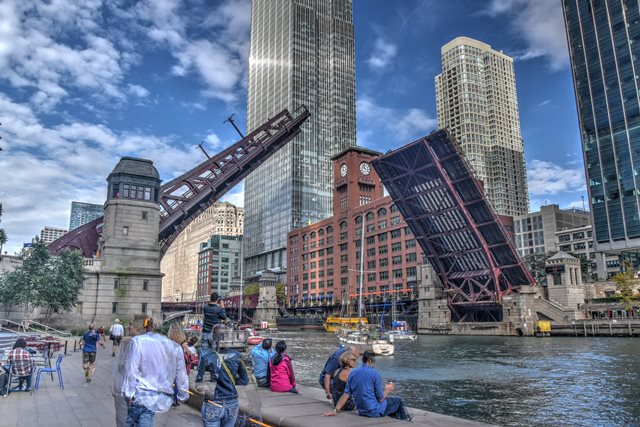
This bridge is quite similar to the nearby La Salle Street Bridge. It is somewhat similar to Franklin Street. However, this bridge shares the common trait with La Salle in that the taller ends of the bridges feature more round-shaped ends than Franklin Street. The Grand Avenue Bridge is an example of a bridge from the older "second generation" of bascule bridges that utilizes this same general design, but has a more clunky appearance with less curving of the top chord. The Clark Street Bridge has lost its original ornate railings, unlike the aforementioned Franklin Street and La Salle Street bridges. Clark, Franklin and La Salle Street Bridges are perhaps the three most aesthetically pleasing examples of the pony truss bascule bridge in Chicago. The unusual, eye-catching shape that the trusses form is made truly beautiful with the graceful curve of the top chord, and the bridge tender houses for these bridges are among the more ornate and well-preserved examples in Chicago.
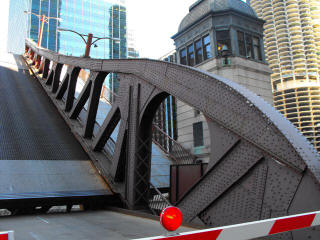
Chicago did a wonderful job replicating the original railings on the Michigan Avenue Bridge, and HistoricBridges.org suggests that the Clark Street Bridge's railings should be replicated in the same way (albeit using the different railing style that was outlined for Clark Street), since aside from the loss of these railings, the bridge has excellent historic integrity and this already beautiful bridge would once again be truly stunning with the ornate railings back in place.
The Clark Street Bridge was built in 1929. The contractors for the bridge are listed on the plaque, and include Fitzsimons and Connell Dredge and Dock Company (who constructed the substructure), Ketler-Elliot Company (who constructed the superstructure), Norwood-Noonan Company (who installed electrical equipment) and M. J. Boyle and Company (whose role is not mentioned on the plaque, nor in the 1930 Annual Report of the Public Works Department).
Another plaque near the bridge reads "Project Completed 1931," suggesting that some part of the bridge or something near the bridge did not get done in 1929 and took a couple more years to finish.
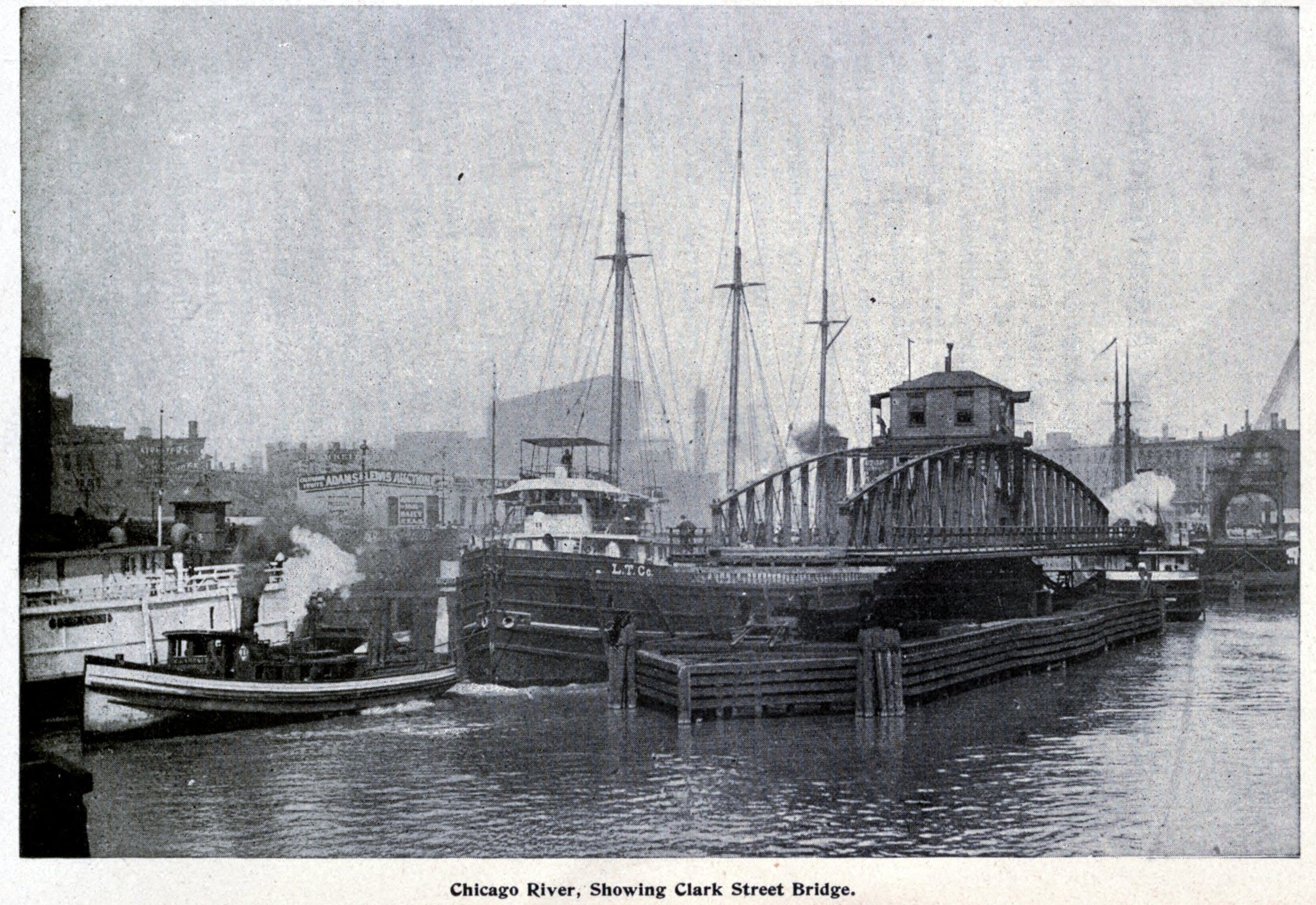
The first documented bridge at this location was built in 1840 and was a floating bridge. It was destroyed in an icy flood in 1849. Floods were not the only problem encountered at this time. The city had been having trouble with bridge tenders as well as the general regulation of bridges. In April 1847, the city passed an ordinance prohibiting teams from stopping on or within 40 feet of a bridge. To address complaints about slow and inconsiderate bridge tenders, in 1852, bridge tenders were put under $500 bonds "for the faithful performance of their duties." By ordinance in January 13, 1854 bridge tenders were actually elevated to the status of "special policemen" and their bonds were increased to $2000. Bridge tenders were required to operate bridges as efficiently as possible.
The 1840 bridge was rebuilt in 1857 by Chapin and Company. It was again listed as rebuilt in 1866, but this time was listed as a iron and wood combination bridge, with Thomas Mackin as the contractor. The bridge later burned in the 1871 fire. It was replaced in 1872 by a wood and iron bridge built by Fox and Howard. In 1889, this bridge was moved to Webster Avenue, allowing for yet another Clark Street Bridge to be built in that same year, this time a steel swing bridge by the Variety Iron Works (presumably the bridge company based in Cleveland).
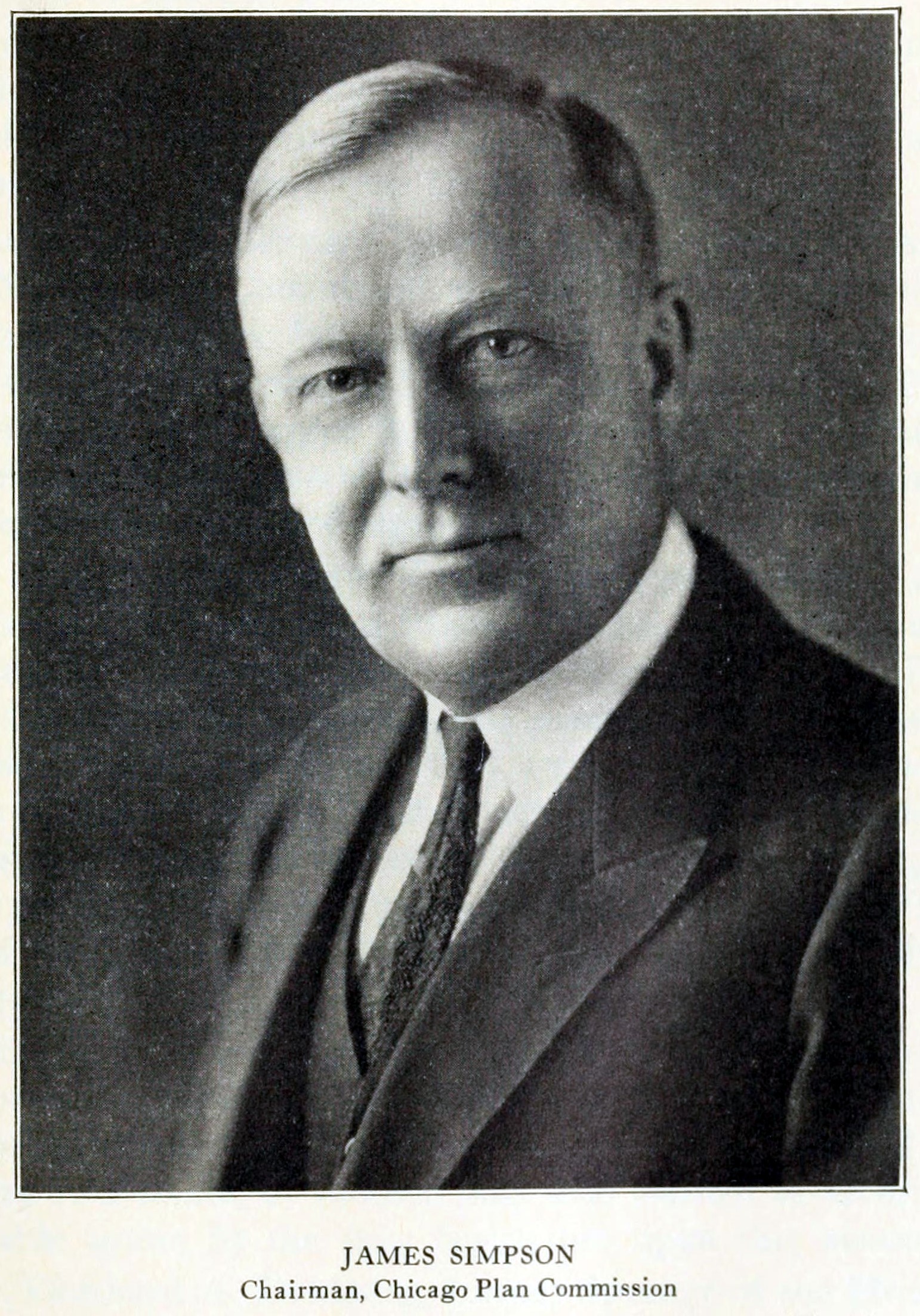

Above: James Simpson was the Chair of the Chicago Plan Commission. Albert A. Sprague was the Vice-Chairman of the Chicago Plan Commission when construction of this bridge began, and became Commissioner of Public Works by the time this bridge was completed. Click on his photo to view an enlarged image that also includes a short biography.
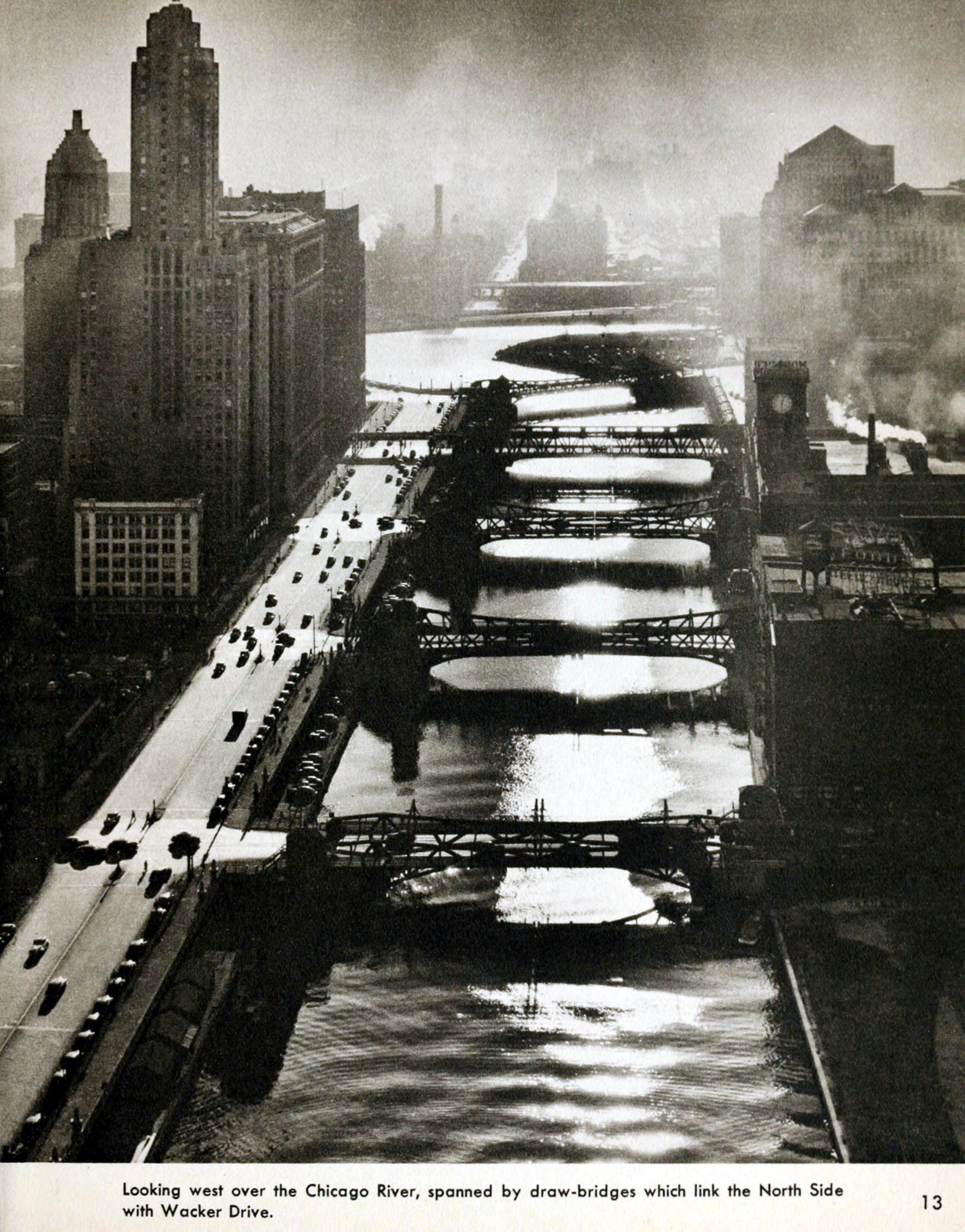
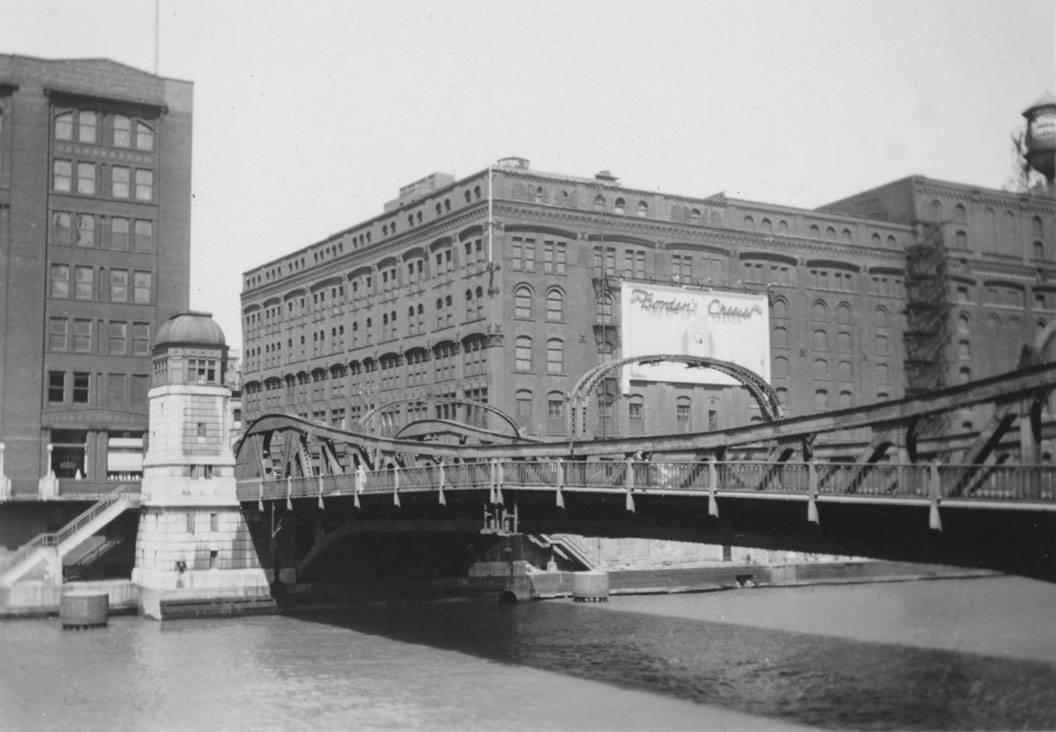
|
Main Plaque N. CLARK ST. BRIDGECITY OF CHICAGO 1929 WM. HALE THOMPSON MAYOR RICHARD W. WOLFE COMMISSIONER OF PUBLIC WORKS
LEON KORDELL RESIDENT ENGINEER CHICAGO PLAN COMMISSION
HUGH E. YOUNG, CHIEF ENGINEER CONTRACTORS FITZSIMONS & CONNELL DREDGE & DOCK CO.
M. J. BOYLE & CO. |
Bridge Completion Plaque PROJECT COMPLETED1931 ANTON J. CERMAK MAYOR ALBERT A. SPRAGUE COMMISSIONER OF PUBLIC WORKS |



Chicago and Cook County are home to one of the largest collections of historic bridges in the country, and no other city in the world has more movable bridges. HistoricBridges.org is proud to offer the most extensive coverage of historic Chicago bridges on the Internet.
General Chicago / Cook County Bridge Resources
Chicago's Bridges - By Nathan Holth, author of HistoricBridges.org, this book provides a discussion of the history of Chicago's movable bridges, and includes a virtual tour discussing all movable bridges remaining in Chicago today. Despite this broad coverage, the book is presented in a compact format that is easy to take with you and carry around for reference on a visit to Chicago. The book includes dozens of full color photos. Only $9.95 U.S! ($11.95 Canadian). Order Now Direct From The Publisher! or order on Amazon.
Chicago River Bridges - By Patrick T. McBriarty, this is a great companion to Holth's book shown above. This much larger book offers an extremely in-depth exploration of Chicago's movable highway bridges, including many crossings that have not existed for many years. Order Now Direct From The Publisher! or order on Amazon.
View Historic American Engineering Record (HAER) Overview of Chicago Bascule Bridges (HAER Data Pages, PDF)
Chicago Loop Bridges - Chicago Loop Bridges is another website on the Internet that is a great companion to the HistoricBridges.org coverage of the 18 movable bridges within the Chicago Loop. This website includes additional information such as connections to popular culture, overview discussions and essays about Chicago's movable bridges, additional videos, and current news and events relating to the bridges.
Additional Online Articles and Resources - This page is a large gathering of interesting articles and resources that HistoricBridges.org has uncovered during research, but which were not specific to a particular bridge listing.
This bridge is tagged with the following special condition(s): Unorganized Photos
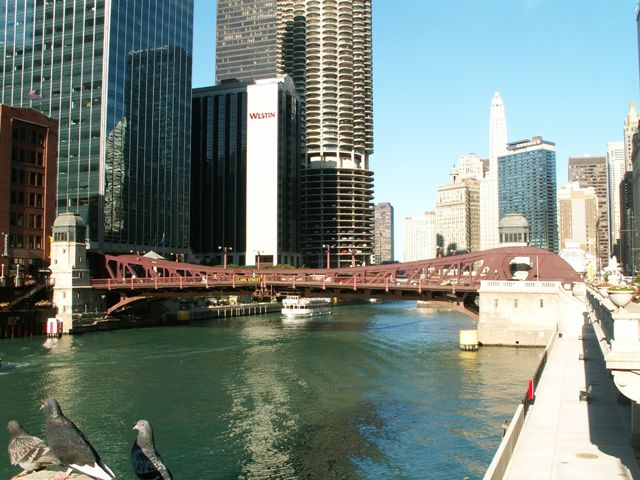



Coordinates (Latitude, Longitude):
Search For Additional Bridge Listings:
Bridgehunter.com: View listed bridges within 0.5 miles (0.8 kilometers) of this bridge.
Bridgehunter.com: View listed bridges within 10 miles (16 kilometers) of this bridge.
Additional Maps:
Google Streetview (If Available)
GeoHack (Additional Links and Coordinates)
Apple Maps (Via DuckDuckGo Search)
Apple Maps (Apple devices only)
Android: Open Location In Your Map or GPS App
Flickr Gallery (Find Nearby Photos)
Wikimedia Commons (Find Nearby Photos)
Directions Via Sygic For Android
Directions Via Sygic For iOS and Android Dolphin Browser
USGS National Map (United States Only)
Historical USGS Topo Maps (United States Only)
Historic Aerials (United States Only)
CalTopo Maps (United States Only)

© Copyright 2003-2024, HistoricBridges.org. All Rights Reserved. Disclaimer: HistoricBridges.org is a volunteer group of private citizens. HistoricBridges.org is NOT a government agency, does not represent or work with any governmental agencies, nor is it in any way associated with any government agency or any non-profit organization. While we strive for accuracy in our factual content, HistoricBridges.org offers no guarantee of accuracy. Information is provided "as is" without warranty of any kind, either expressed or implied. Information could include technical inaccuracies or errors of omission. Opinions and commentary are the opinions of the respective HistoricBridges.org member who made them and do not necessarily represent the views of anyone else, including any outside photographers whose images may appear on the page in which the commentary appears. HistoricBridges.org does not bear any responsibility for any consequences resulting from the use of this or any other HistoricBridges.org information. Owners and users of bridges have the responsibility of correctly following all applicable laws, rules, and regulations, regardless of any HistoricBridges.org information.
